Every method we follow traces back to how beekeeping was done in Crete before chemicals entered the fields, likely close to how it was done in Minoan times.

How we do it
Beekeeping Methods
Honey, the way it was always meant to be made
Our bees are never treated with antibiotics, pesticides, or insecticides, and never fed sugar water or artificial syrups, the easiest and most common way to boost yield.
Every method we follow traces back to how beekeeping was done in Crete before chemicals entered the fields, likely close to how it was done in Minoan times, when the island first built its name around honey.
We choose quality over quantity, always
Honey is the bees’ own food, and we treat it that way: we take only what they can safely spare, never more. It’s why our hives yield a fraction of what industrial methods could produce here. We could take far more. We choose not to, and it’s a commitment we make to the balance of our environment and our island, and the wellbeing of our bees.

Harvesting and Care
Touched only by the bees, and our hands
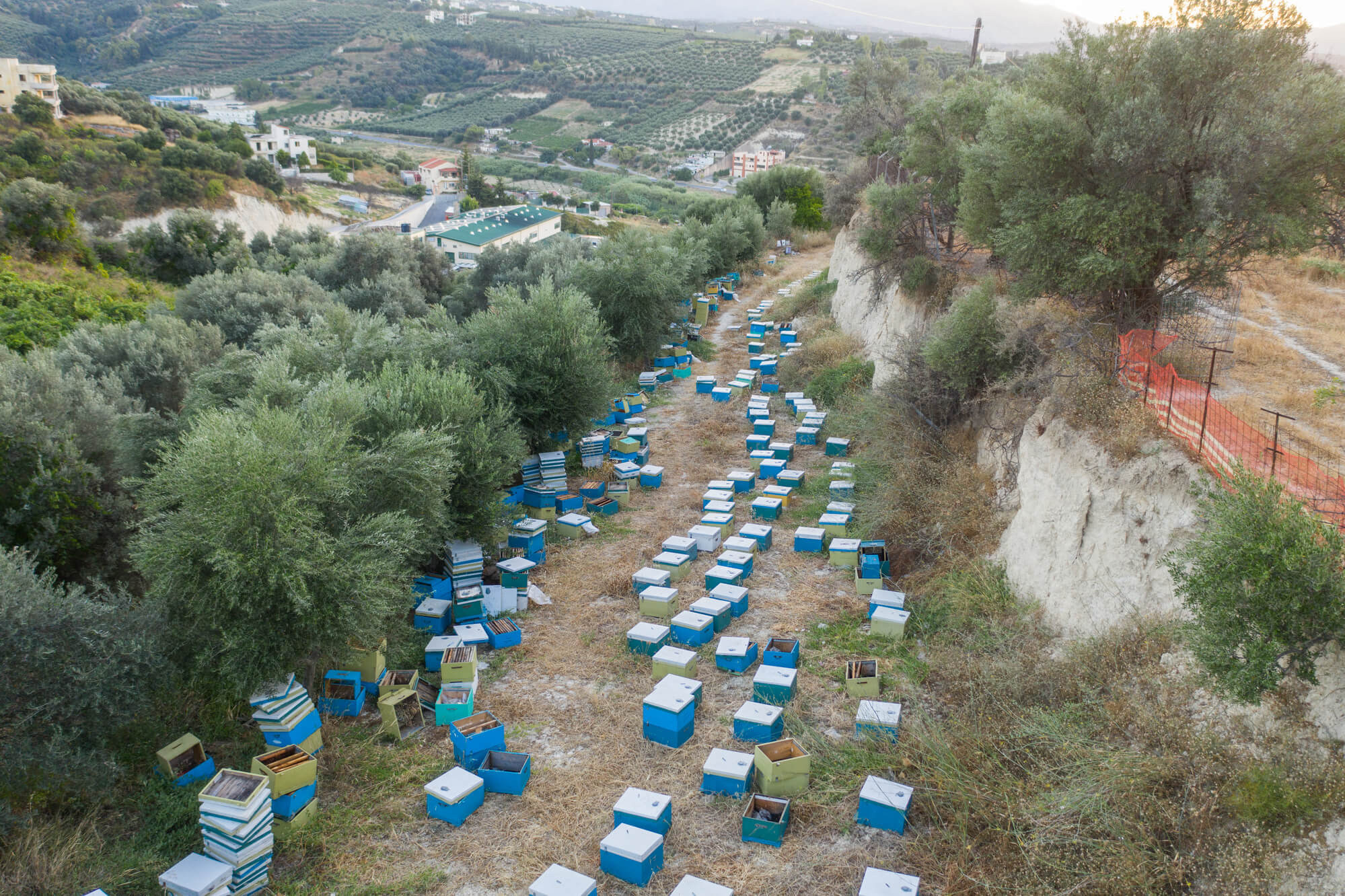
We harvest only what the colony can spare, by hand, frame by frame, ensuring that each one holds enough honey to see the bees safe through the seasons ahead. Every November, we follow the same practice taught to us years ago, a vital step that keeps the hives thriving and true to how it’s always been done here.
From hive to your table, nothing is added and nothing is heated: no step strips away the enzymes, pollen, and nutrients raw honey is meant to carry.
From branch to jar, in season only
The same values guide how we treat our fruit. Nothing is picked before its time, and nothing is forced: each variety is gathered only when it ripens naturally on our own trees, in the quantity the season allows, no more. From there, everything is cooked and prepared by hand, the traditional way, with only enough sugar to preserve what the fruit already offers on its own.


